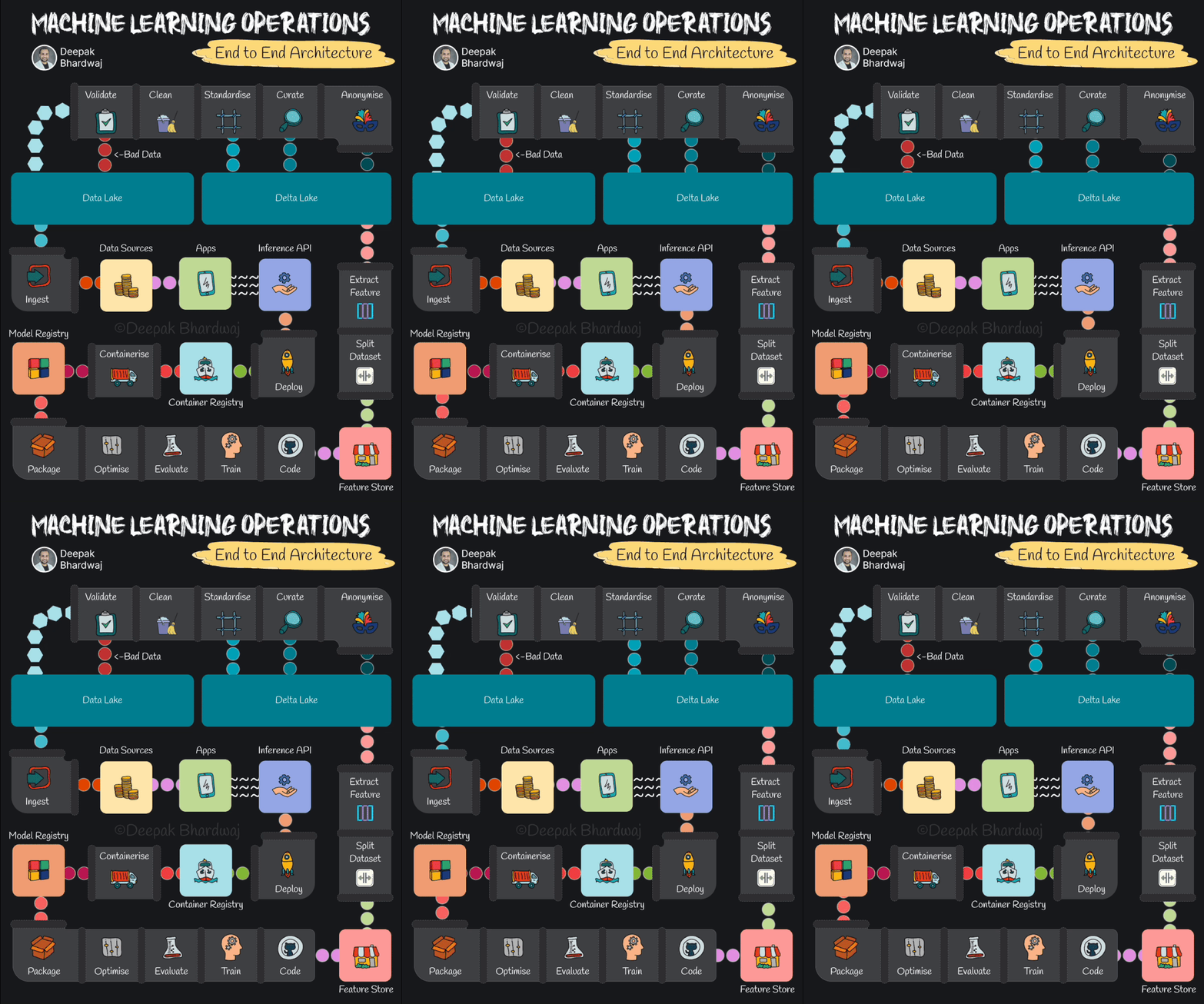
Several organizations have started their journey toward developing their ML models. The journey can be challenging but to make it easy @Deepak Bhardwaj has outlined the following steps with a structured approach towards the development of AI models.
🔘 𝐃𝐚𝐭𝐚 𝐈𝐧𝐠𝐞𝐬𝐭𝐢𝐨𝐧: Collect data from various sources.
🔘 𝐃𝐚𝐭𝐚 𝐏𝐫𝐞𝐩𝐚𝐫𝐚𝐭𝐢𝐨𝐧: Preparing data for analysis. ↳ Validate: Ensure data is correct. ↳ Clean: Remove errors and inconsistencies. ↳ Standardise: Make data uniform. ↳ Curate: Organise data effectively. ↳ Anonymise: Protect personal information.
🔘 𝐃𝐚𝐭𝐚 𝐋𝐚𝐤𝐞 & 𝐃𝐞𝐥𝐭𝐚 𝐋𝐚𝐤𝐞: Store raw and processed data.
🔘 𝐅𝐞𝐚𝐭𝐮𝐫𝐞 𝐄𝐧𝐠𝐢𝐧𝐞𝐞𝐫𝐢𝐧𝐠: Create useful data features. ↳ Extract Features: Select essential data points. ↳ Split Dataset: Divide data for training and testing.
🔘 𝐌𝐨𝐝𝐞𝐥 𝐓𝐫𝐚𝐢𝐧𝐢𝐧𝐠: Develop and refine models. ↳ Code: Write algorithms. ↳ Train: Teach models using data. ↳ Evaluate model performance. ↳ Optimise: Improve model accuracy.
🔘 𝐌𝐨𝐝𝐞𝐥 𝐑𝐞𝐠𝐢𝐬𝐭𝐫𝐲 & 𝐃𝐞𝐩𝐥𝐨𝐲𝐦𝐞𝐧𝐭: Manage and deploy models. ↳ Package: Bundle models for deployment. ↳ Containerise: Use containers for consistency. ↳ Deploy: Implement models into production.
The alignment or the strategic pyramid can be divided into three layers i.e purpose, strategy, and execution. Each layer is critical and has a set of activities.

Wendy McGuiness (2011) has articulated the concept in 9 key pillars of successful strategy and its execution and the details are.

A) Purpose:

1. Vision:

Paints a clear picture of the desired future state of the company, providing direction and inspiration by answering the question "Where do we want to be in the future?"

2. Mission:

Defines the fundamental purpose or reason for the existence of the corporation, answering questions like "Why do we exist?" and "What is our core reason for being in business?"

3. Values:

Sets out the guiding principles and beliefs that shape the corporate culture and decision-making processes, reflecting the organization's ethical standards and desired behaviors.

B) Strategy:

4. Strategic Intent:

Outlines the overarching goals and objectives of the organization, defining the desired outcomes and the path to achieve them.

5. Drivers:

Identifies the key factors or strategic priorities that will drive the company's success, such as market expansion, product innovation, cost leadership, or customer experience.

6. Enablers:

Represents the resources, capabilities, and infrastructure needed to execute the strategy effectively, including technology, human capital, financial resources, etc.

C) Execution:

7. Targets and Initiatives:

Sets specific, measurable targets and initiatives aligned with the strategic objectives, providing actionable steps to move the organization forward.

8. Performance Indicators:

Establishes metrics and key performance indicators (KPIs) to track progress toward goals and assess the effectiveness of strategic initiatives.

9. Strategy Map:

Clearly communicates the corporate strategy and ensures alignment across the organization.
IMF has recently published the real GDP growth for global economies for 2024-2025.
According to the forecast Global GDP is projected to grow by 3.2% in 2024 and by 3.3% in 2025.
Advance economies are projected to grow by 1.7% in 2024 with U.S taking the lead at 2.6%. Some of the other major economies like the U.K, Germany, France, and Japan are projected to grow under 1% signaling a major slowdown.
In emerging markets and developing economies, India is projected to take the lead with 7% growth with China at 5% in 2024.
Effective 1st August, the European Commission has implemented the world's first comprehensive regulation on artificial intelligence which is referred to as the “European Artificial Intelligence Act (AI Act)”.
The AI Act is designed to ensure that AI developed and used in the EU is trustworthy, with safeguards to protect people's fundamental rights. The regulation aims to establish a harmonized internal market for AI in the EU, encouraging the uptake of this technology and creating a supportive environment for innovation and investment.
The AI Act is based on a product safety and risk-based approach in the EU:
a) Minimal risk: Most AI systems, such as AI-enabled recommender systems and spam filters, fall into this category. These systems face no obligations under the AI Act due to their minimal risk to citizens' rights and safety.
b) Specific transparency risk: AI systems like chatbots must disclose to users that they are interacting with a machine. Certain AI-generated content, including deep fakes, must be labeled as such, and users need to be informed when biometric categorization or emotion recognition systems are being used.
c) High risk: AI systems identified as high-risk will be required to comply with strict requirements, including risk-mitigation systems, high-quality of data sets, logging of activity, detailed documentation, clear user information, human oversight, and a high level of robustness, accuracy, and cybersecurity.
d) Unacceptable risk: AI systems considered a clear threat to the fundamental rights of people will be banned. This includes AI systems or applications that manipulate human behavior to circumvent users' free will, such as toys using voice assistance to encourage the dangerous behavior of minors, systems that allow ‘social scoring' by governments or companies, and certain applications of predictive policing.
Member States have until 2 August 2025 to designate national competent authorities, who will oversee the application of the rules for AI systems and carry out market surveillance activities. The Commission's AI Office will be the key implementation body for the AI Act at EU level, as well as the enforcer for the rules for general-purpose AI models.
Three advisory bodies will support the implementation of the rules.
1) The European Artificial Intelligence Board will ensure a uniform application of the AI Act across EU Member States and will act as the main body for cooperation between the Commission and the Member States.
2) A scientific panel of independent experts will offer technical advice and input on enforcement.
3) The AI Office can also receive guidance from an advisory forum, composed of a diverse set of stakeholders.
The origins of currency can be tracked back to 5,000 years when the Mesopotamian people created the shekel, which is considered to be the first known currency. Before this, people used the bartering system to trade for goods and services. Gold and silver coins date back to around 650 to 600 B.C. when stamped coins were used to pay armies. Some evidence suggests that metal coins may be as old as 1250 B.C.
Since then, humanity has expanded, developed, and grown by leaps and bound, and currently there are 180 currencies circulating in 197 countries around the world, with the euro, US dollar, British pound and Japanese yen being the leading ones.
Fiat Currency
The above traditional currencies (commonly referred to as fiat money) lacks intrinsic value and is established as the legal tender by the respective Government regulation.
Fiat money is a government-issued currency that is not backed by a physical commodity, such as gold or silver, but rather by the government that issued it. The value of fiat money is derived from the relationship between supply and demand and the stability of the issuing government, rather than the worth of a commodity backing it. If the country’s economy is performing well, the value of that currency is increased on the world stage.
Fiat money serves as a functional currency when it handles the role of monetary unit providing a numerical account and facilitating exchange. However, the mortgage crisis of 2007 proved otherwise and raised questions towards the stability and confidence in fiat currencies and the overall financial and regulatory system governing them, specifically the US dollar.
Cryptocurrency
Technology has changed many aspects of the way we live and work and has introduced the same new options for currency with cryptocurrency as a market disruptor and blockchain technology being the underlying technology supporting it.
Cryptocurrency, referred to as crypto, is any form of currency that exists digitally or virtually and uses cryptography to secure transactions. Cryptocurrencies don't have a central issuing or regulating authority, instead using a decentralized system to record transactions and issue new units. These are often seen as more secure, harder to forge currencies.
Cryptocurrency is a digital payment system that doesn't rely on banks to verify transactions. It's a peer to peer system that enables anyone anywhere to receive or send payments. Instead of being physical money carried around and exchanged in the real world, cryptocurrency payments exist purely as digital entries. Some of the prominent cryptos are Bitcoin, Ethereum, and countless others.
Challenges in the current financial system and fiat currency
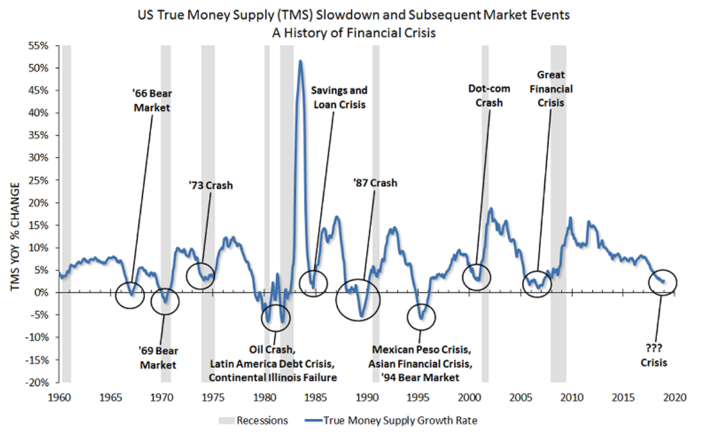
Dozens of serious financial crises have taken place in the world over the past two decades, and they could even run into the hundreds, depending upon how a financial crisis is defined. Of these, some 40- 70 have had a sweeping macroeconomic impact.
Although the cost of a financial crisis is difficult to assess, it can prove enormous. Assessments depend, among other things, on whether to include only direct expense incurred by the public sector on account of rescue operations, or whether an attempt is also made to assess the loss of production caused by the crisis. If you consider all the direct and indirect impacts of any recession or crisis, the effects add up astronomically.
We have seen the current financial system fail over and over again, whether it be the Asian financial crisis, dot-com crash, or the 2008 financial crisis. The checks and balances, safeguards, or oversight systems didn’t preform and fell flat, with billions of dollars of wealth lost for major organizations, governments, and average citizens.
The value of fiat currency depends on the health of a country's economy and how its government manages interest rates, monetary supply, investments, and inflation. To discourage borrowing and spending, the government can increase interest rates, hence reducing the supply of money. Also, when needed, governments can lower interest rates to encourage borrowing and spending, increasing the money supply. However, this has to be done cautiously as it can increase inflation, as we’re seeing now in many countries, including Canada.
The unchecked printing of money can result in inflation or even hyperinflation, severely devaluing the currency. A number of countries have faced hyper inflation and seen their fiat currency crashed, resulting in an economic disaster.
The road ahead
The current financial system based on fiat currencies has been there for a long time, and the best financial experts in the world have still not been able to insulate from crisis or safeguard the wealth of all. The future requires that we use the technology and currencies available that cannot be manipulated, cannot just be printed as needed, are transparent, and cannot be further packaged (e.g CDO’s) for the monetary gains of the few.
Without the above, we will continue to endure weak financial systems and fiat currency, which lead to uncertainty and instability. We absolutely need alternate systems and currencies to prevent the reoccurring failures of the current ones. Are cryptocurrencies and blockchain technology the answers to global financial issues? Only time will tell, but I think that a forward-thinking economist, looking at all the data and historical evidence, would say that it’s one of the option moving forward.
The start of 2022 has been quite strong for the global aviation industry, even though there are still challenges and further recovery needed. Q1 has shown very positive year-over-year growth, with seat capacity at 1.01 billion for the quarter, an increase of 43% over the same period last year. Although it was still short 344 million seats compared to pre-pandemic levels (2019), recovery has been quite positive.

Moving on to Q2, we are seeing significant capacity growth during this quarter as well, with May 2022 at 411 million seats and June at 441 million seats, nearly 50% increases from 2021.

As travel and border restrictions have relaxed worldwide and people start to make plans for the summer season, there is a clear uptick in the seat capacity in July for 481 million seats and August at 485 million seats which are increases of 38% and 41% respectively when compared with last year. This is positive news, as a lot of people had delayed their leisure plans due to COVID-19 and are now able to take deferred trips, which is really encouraging for the recovery of the industry.
The chart above forecasts capacity plans through the end of the year. However, the current planned capacity is not guaranteed and will be adjusted as the months get closer. Since the start of pandemic, airlines’ planning horizons have been reduced to between four and six weeks due to market uncertainty, with capacity being adjusted to meet demand closer to the operating month.

To analyze this growth more closely, we can look at the geographic demographics to better understand how each region is recovering. The following table shows capacity per region, as well as growth rates for next three months.
The highest capacity increase regions for the coming months are Europe (174.76%), South America (94%), and the Middle East (70.3%). There has been a slower capacity increase in Asia due to a re-emergence of COVID-19 in some countries.

Overall though, the current forecasts are incredibly encouraging. As restrictions are being lifted, aviation, along with the hospitality industry, is looking forward to a strong summer season for a quicker recovery.

Feel free to contact me if you would like any more insights relating to this article.

Thank you.
Data is one of the most valuable assets a business can have and has a tremendous impact on its long-term success.

We have all heard the phrase that data is the new oil, speaking to the value it possesses. But to leverage this great resource an organization needs to ensure that there is a full-fledged plan in place to take advantage of its benefits, and that’s where data management comes in.

Data management is the practice of collecting, keeping, and using data securely, efficiently, and cost-effectively. The goal of data management is to help people, organizations, and connected devices optimize the use of data within the bounds of ethics, policy, and regulations in order to produce actions that maximize the benefit and value to the organization.

Data management plays an essential and foundational role for leveraging data at an enterprise level, for business analytics, for artificial intelligence and machine learning, sharing data with stakeholders with proper governance and security in place, for transactional and operational systems, and for monetizing data.

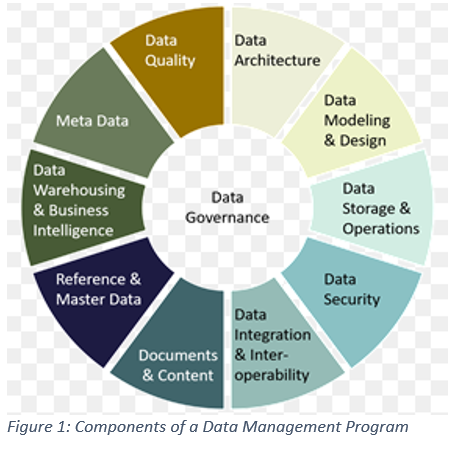
For any organization that wants to implement a proper data management practice, the 11 knowledge areas shown in Figure 1 can help create a framework.

In this article, I will delve deeper into each knowledge area.
1.    Data Governance

Data governance is a collection of processes, roles, policies, standards, and metrics that ensures the effective and efficient use of information, helping an organization to achieve its goals. It establishes the processes and responsibilities that ensure the quality and security of the data used across a business or organization. Data governance defines who can take what action, upon what data, in what situations, using what methods.

While the driver of overall data management is to ensure that an organization leverages value out of its data, data governance focuses on how people and processes interact with and use data.

2.    Data Architecture

Data architecture translates business needs into data and system requirements and seeks to manage both data and the way it flows through the enterprise. The goal of data architecture is to show the company how data is acquired, transported, stored, queried, and secured. Explicitly, data architecture: is a discipline that documents an organization's data assets, maps how data flows through its systems, and provides a blueprint for managing data. It must include two main components: Enterprise Data Models (e.g., data structures and data specifications)and Data Flow Design.

·      Enterprise Data Model (EDM): The EDM is a holistic, enterprise-level, implementation-independent conceptual or logical data model providing a common consistent view of data across the enterprise. An EDM includes key enterprise data entities (i.e., business concepts), their relationships, critical guiding business rules, and some critical attributes.

·      Data Flow Design: Defines the requirements and blueprint for storage and processing across databases, applications, platforms, and networks. These data flows map the movement of data to business processes, locations, business roles, and to technical components.

3.    Data Modeling and Design

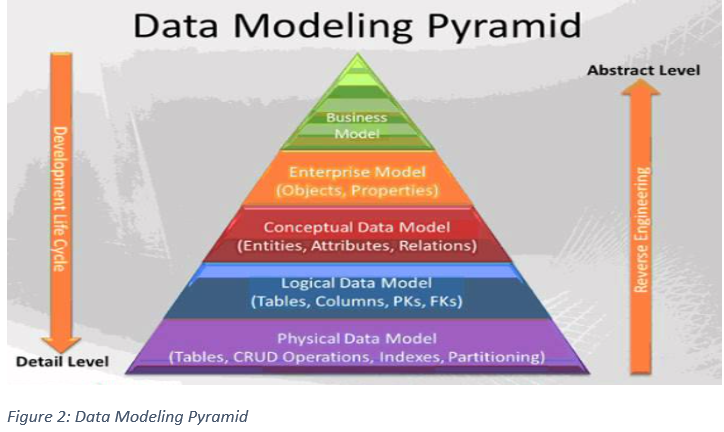
Data modeling is the process of diagramming data flows. Data modeling creates a visual representation of either a whole information system or parts of it to communicate connections between data points and structures. The goal is to illustrate the types of data used and stored within the system, the relationships among these data types, the ways the data can be grouped and organized, and its formats and attributes.

Data modeling is a critical component of data management. The modeling process requires that organizations discover and document how their data fits together. Data models help an organization to understand its data assets.
used schemes are: Relational, Dimensional, Object-Oriented, Fact-Based, Time-Based, and NoSQL. Models of these schemes exist at three levels of detail: conceptual, logical, and physical. Each model contains a set of components. Examples of components are entities, relationships, facts, keys, and attributes. Once a model is built, it needs to be reviewed and once approved, maintained.

4.    Data Storage and Operations

Data Storage and Operations includes the design, implementation, and support of stored data, to maximize its value throughout its lifecycle, from the moment it is created or acquired to the time it is disposed of. This part of data management includes two sub-activities:

·      Database support focuses on activities related to data lifecycle, from initial implementation of a database environment, through obtaining, backing up, and purging data. It also includes ensuring the database performs well. Monitoring and tuning are critical to database support.

·      Database technology support includes defining technical requirements that will meet organizational needs, defining technical architecture, installing and administering technology, and resolving issues related to technology.

5.    Data Security

Data Security includes the planning, development, and execution of security policies and procedures to provide proper authentication, authorization, access, and auditing of data and information assets. Data security is the practice of protecting digital information from unauthorized access, corruption, or theft throughout its entire lifecycle. It’s a concept that encompasses every aspect of information security from the physical security of hardware and storage devices to administrative and access controls, as well as the logical security of software applications.

This includes protecting your data from attacks that can encrypt or destroy data, such as ransomware, as well as attacks that can modify or corrupt your data. Data security also ensures data is available to anyone in the organization who has access to it.

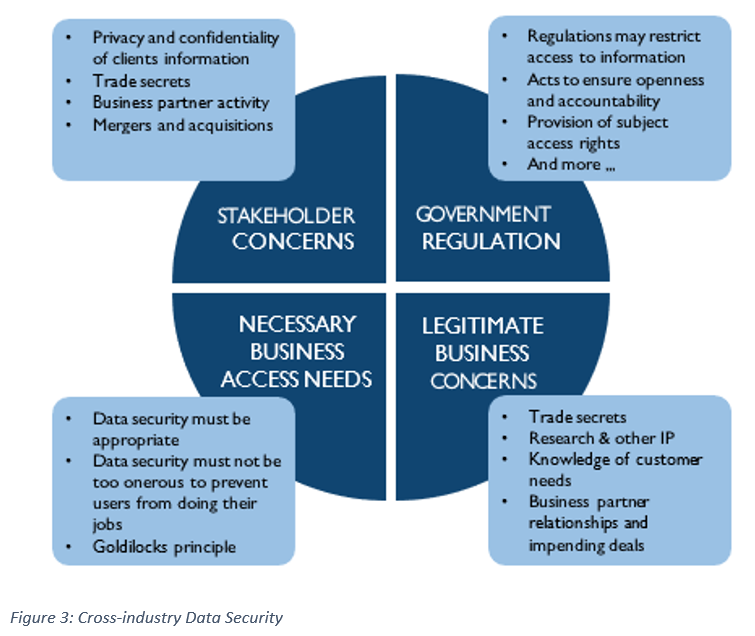
 Effective data security policies and procedures ensure that the right people can use and update data in the right way, and any undesired access is restricted. Organizations needs to understand and comply with the privacy and confidentiality interests and needs of all stakeholders is in the best interest of every organization. The following diagram shows examples of data security requirements for various entities.
6.    Data Integration and Interoperability

Integration refers to connecting applications so that data from one system can be accessed by one or more other ones. But integration involves a third party (a middleman or, in software terms, middleware) that translates the data and makes it “work” for the receiving system. It’s not a direct path for information to get from point A to point B in this scenario.

Interoperability is real-time data exchange between systems without middleware. When systems are interoperable, they have the ability to not only share information, but to interpret incoming data and present it as it was received, preserving its original context.

In layman’s terms: interoperable systems speak the same language. On the other hand, integration is more like having a conversation through an interpreter.

Data Integration and Interoperability (DII) solutions enable basic data management functions on which most organizations depend:

·      Data migration and conversion

·      Data consolidation into hubs or marts

·      Integration of vendor packages into an organization’s application portfolio

·      Data sharing between applications and across organizations

·      Distributing data across data stores and data centers

·      Archiving data

·      Managing data interfaces

·      Obtaining and ingesting external data

·      Integrating structured and unstructured data

·      Providing operational intelligence and management decision support

7.    Document and Content Management

Document and Content Management controls the capture, storage, access, and use of data and information stored outside relational databases. Its focus is on maintaining the integrity of and enabling access to documents and other unstructured or semi-structured information, which makes it roughly equivalent to data operations management for relational databases. However, it also has strategic drivers.

The primary business drivers for document and content management include regulatory compliance, the ability to respond to litigation and e-discovery requests, and business continuity requirements. Good records management can also help organizations become more efficient. Well-organized, searchable websites that facilitate searching help improve customer and employee satisfaction.

8.    Master and Reference Data

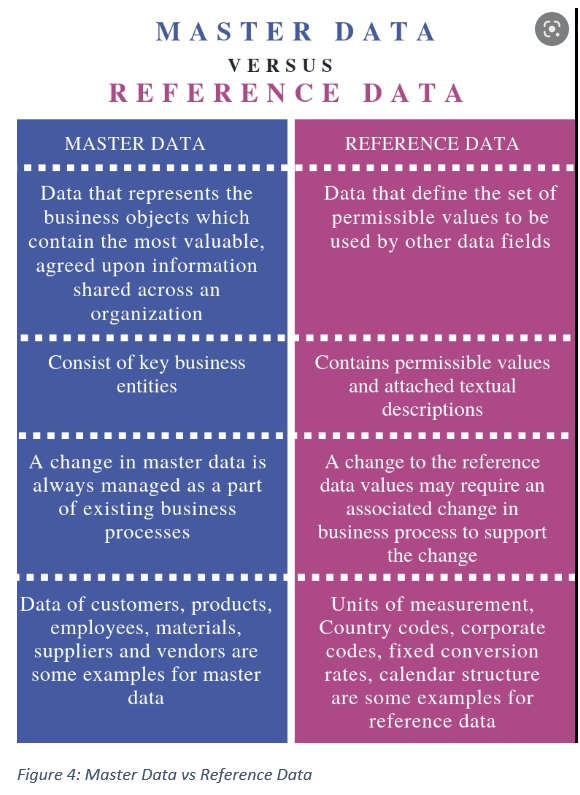
All organizations have enterprise data on their products, assets, financials, employees, and customers, but where this data is housed can range from siloed databases to spreadsheets to old file cabinets. Bringing the data sources together in an actionable format accessible across the enterprise with consistent definitions and structured organization creates master data.
There are two kinds of reference data: external and internal. External reference data includes rarely changing norms like countries, currencies, languages, and units of measure. Internal reference data is where it can get complicated. It defines and structures master data, mapping it to your business processes. Internal reference data exists to turn other data into business information.

9.    Data Warehousing and Business Intelligence

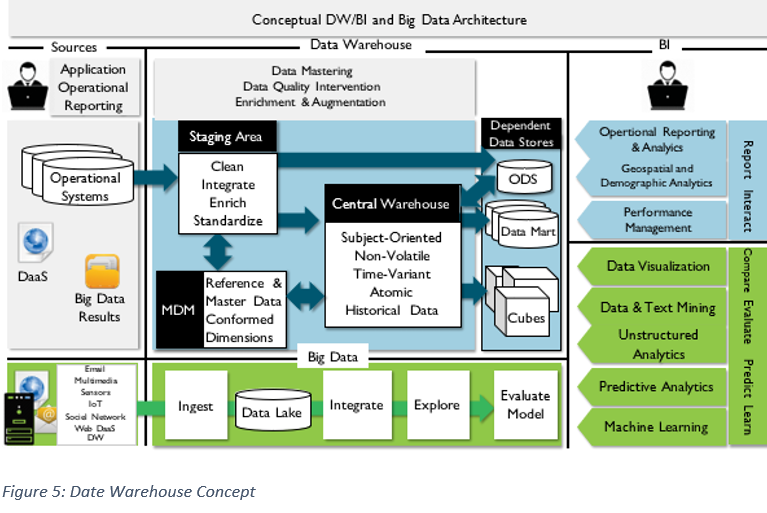
The concept of the Data Warehouse has been around for quite some time and emerged in the 1980s as technology enabled organizations to integrate data from a range of sources into a common data model. The integration of data helps to provide insights into new opportunities and open new possibilities for leveraging data to create organizational value.

The primary driver for data warehousing is to support operational functions, compliance requirements, and Business Intelligence (BI) activities (though not all BI activities depend on warehouse data). Business intelligence is the process by which enterprises use strategies and technologies for analyzing data, with the objective of improving strategic decision-making and providing a competitive advantage. BI combines business analytics, data mining, data visualization, data tools and infrastructure, and best practices to help organizations to make more data-driven decisions.

A Data Warehouse (DW) is a combination of two primary components: An integrated decision support database and the related software programs used to collect, cleanse, transform, and store data from a variety of operational and external sources.
10.    Metadata

By definition, Metadata is “data about data,” which doesn’t provide justice to the term. The kind of information that can be classified as Metadata is wide-ranging. Metadata includes information not only for technical but for business processes as well, data rules and constraints, and logical and physical data structures.

It describes the data itself (e.g., databases, data elements, data models), the concepts the data represents (e.g., business processes, application systems, software code, technology infrastructure), and the connections between the data and concepts. Metadata helps an organization understand its data, its systems, and its workflows.
Metadata is often categorized into three types: business, technical, and operational. These categories enable people to understand the range of information that falls under the overall umbrella of Metadata, as well as the functions through which Metadata is produced.

11.    Data Quality

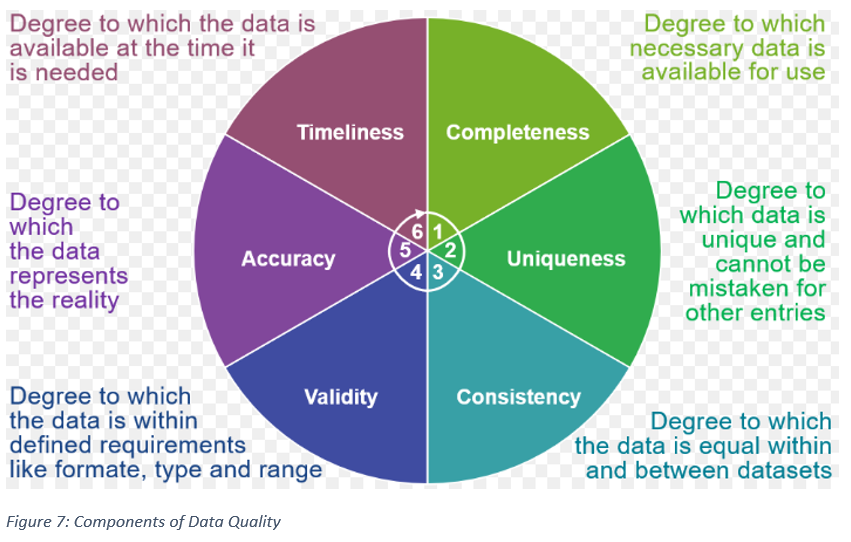
Data quality is a measurement of how effectively a data set can serve the specific needs of an organization. High quality data is required for trusted decisions. It refers to the overall utility of a dataset and its ability to be easily processed and analyzed for other uses. A list of popular data quality characteristics and dimensions include timeliness, completeness, uniqueness, consistency, validity, and accuracy.
Conclusion

Now that you have a high-level overview of data management’s 11 components, you can see why data is one of the most valuable assets the modern business can possess, if used properly. There is plenty of reading available on the subject online, including the following references I used in this article.

Good luck with all your data management ventures!

References

Diamantini, C., Giudice, P. L., Musarella, L., & Ursino, D. (2020, September 24). Fig. 1. the three kinds of metadata proposed by our model. ResearchGate. https://www.researchgate.net/figure/The-three-kinds-of-metadata-proposed-by-our-model_fig1_327314874

Henderson, D., & Earley, S. (2017). Dama-Dmbok: Data Management Body of Knowledge (2nd ed.). Technics Publications.

Lean Data. Data Quality. (n.d.). https://www.lean-data.nl/data-quality/

Lithmee. (2019, June 15). What is the difference between master data and reference data. Pediaa.Com. https://pediaa.com/what-is-the-difference-between-master-data-and-reference-data/

Roberts, B. (2021, April 29). Integration vs interoperability: What's the difference? Surgical Information Systems Blog. https://blog.sisfirst.com/integration-v-interoperability-what-is-the-difference

Stedman, C. (2021, August 4). What is Data Architecture? A Data Management Blueprint. SearchDataManagement. https://www.techtarget.com/searchdatamanagement/definition/What-is-data-architecture-A-data-management-blueprint

What is Data Modeling?: Definition, importance, & types: SAP insights. SAP. (n.d.). https://www.sap.com/insights/what-is-data-modeling.html

https://www.informationweek.com/big-data-analytics/data-management-heads-into-major-transition
Many of us are entering 2022 with a sense of cautious optimism, and while there are still some challenges, let’s hope that this year will bring joy, happiness, and global economic recovery, followed closely by the recovery of the aviation industry.

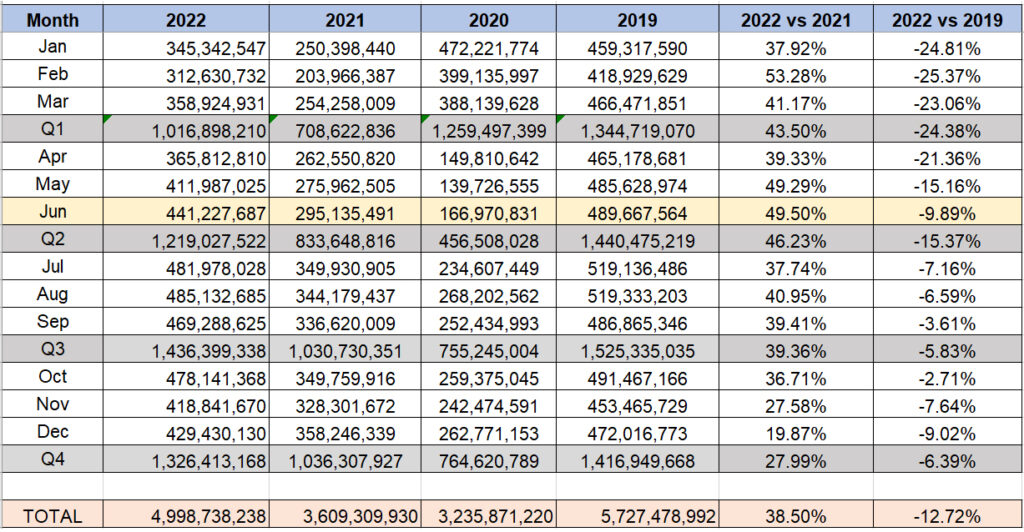
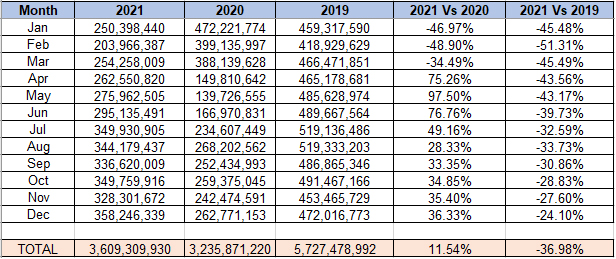
As this is the first issue for 2022, lets first start with some insights into how 2021 closed compared to 2020 and 2019. The following table shows the month-wise seat capacity for all flights worldwide over the past three years.
2021 closed with approximately 3.60 billion seats, which was 12% higher than 2021. Initially, Q1 of 2021 showed signs of a decline as the economy was still recovering and there were a lot of travel restrictions in place in most countries. But, as the number and intensity of restrictions were eased, more capacity was added into the market, and significant capacity was added from April onwards.

While 2021 was a positive year compared to 2020, there is still much recovery needed, as the total seat capacity in 2021 was only 63% of what it was in 2019. 2019 had 5.7 billion seats compared to 3.6 billion in 2021. 2021 was a roller coaster ride with restrictions coming in and being lifted, the emergence of the Delta variant and then at the end of the year the Omicron variant, which is expected to impact the recovery in 2022 as well.

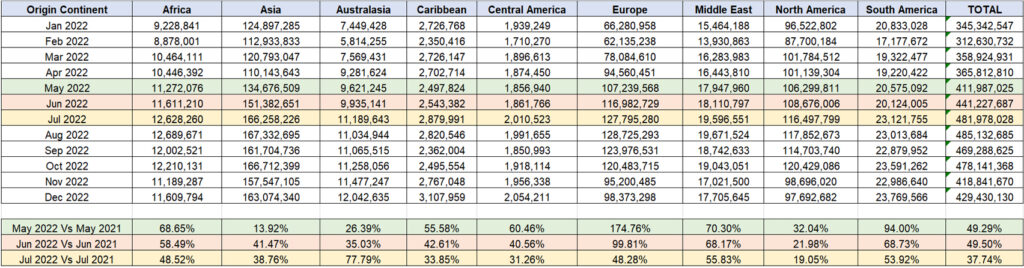
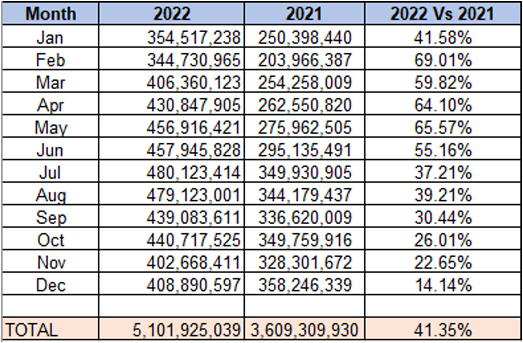
The below table highlights the planned seat capacity for 2022 as of January 10, 2022.
The current planned capacity is not guaranteed and will be adjusted as the months get closer. Since the start of pandemic, airlines’ planning horizons have been reduced to four to six weeks due to market uncertainty, with capacity being adjusted to meet demand close to the operating month.

The January 2022 planned capacity stands as 354 million seats, which is 42% more than January 2021 but four million fewer seats then December 2021, which shows impact that Omicron is already having on capacity.

We will continue to monitor the global environment and trends to see how it impacts the aviation industry and will bring the latest insights to you monthly.

Feel free to contact me if you need any more insights relating to this article.

Thank You
While there has been positive news of the aviation industry’s recovery as economies and borders were in the process of reopening, there are two critical imminent issues that pose a risk to its recovery.

The first and foremost is the spread of Omicron COVID-19 variant. New travel restrictions prompted by the variant’s rapid spread have set back the recovery in international flights by forcing cancellations and delays in various regions. A flurry of new testing rules, vaccination requirements, and border closings has raised concerns ahead of the important Christmas travel season. More than 30 countries have closed their borders to some nations, and others have imposed even stricter measures to curb the spread of the variant.

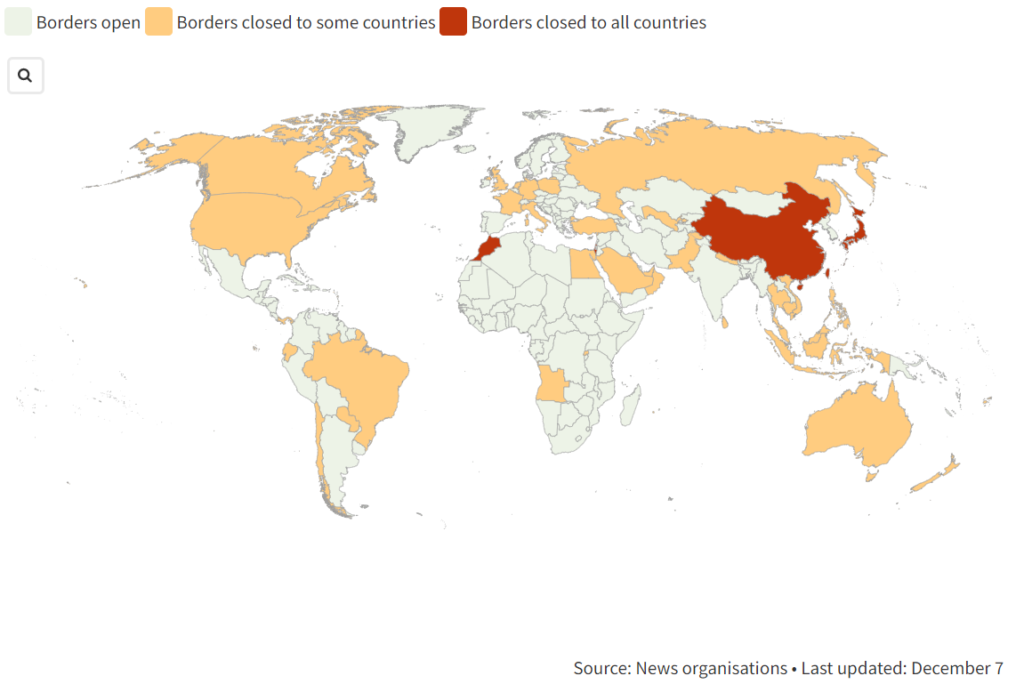
Nations are adopting differing levels of border control, with countries such as Israel, Morocco and Japan closing their borders entirely, while others have only tightened COVID-19 testing at the border. The following map is current as of December 7, and the status is changing quite fast as the Omicron spread continues (Aljazeera).
China, Israel, Japan, and Morocco have implemented total bans on international travel, for different lengths of time and with different exceptions. For the most part, however, non-residents are not permitted to enter these countries.

Dozens of countries recently announced partial bans on international travel, many of which focus on restricting travel from high-risk countries such as Botswana, Eswatini, Lesotho, Malawi, Mozambique, Namibia, Seychelles, South Africa, and Zimbabwe. Major economic generator countries have implemented this type of restriction, including the United States, Canada, Australia, and Russia.

The second critical issue impacting aviation recovery is the inflation rate. In Canada and the United States, the inflation rate is rising at record levels. The effects of inflation have destroyed national economies and influenced government elections. It was even declared Public Enemy #1 in the US in 1974. But what exactly is inflation?

 “Inflation is the rate of increase in prices over a given period of time. Inflation is typically a broad measure, such as the overall increase in prices or the increase in the cost of living in a country. But it can also be more narrowly calculated—for certain goods, such as food, or for services, such as a haircut, for example. Whatever the context, inflation represents how much more expensive the relevant set of goods and/or services has become over a certain period, most commonly a year” (International Monetary Fund).

According to the Organization for Economic Co-operation and Development (OECD), consumer price index in the U.S to increase by an average of 4.4% in 2022, up from 3.1% when it last released forecasts in September and inflation in the Eurozone is expected to be 2.7%, up from 1.9% (Wall Street Journal). The new forecasts were made before the discovery of the Omicron variant; with the new variant, the projected inflation rate may further increase.

The reason inflation impacts aviation is that if the price of everyday food, services, and consumables increase with no increase in salaries, people will have less money left to spend on non-essentials, such as leisure travel, because the priority will be to pay bills and put food on the table.

As we move into the new year, we will have to keep a very close eye on these two critical issues as these can significantly impact the aviation industry’s recovery from the pandemic.
This article is in continuation of my previous insights into global seat capacity. Past issues can be found posted on my LinkedIn profile.

The fourth wave of the COVID-19 pandemic continues to impact the aviation industry, and several regions remain under various lockdowns or restrictions. Therefore, I thought it would be interesting to look at how global seat capacity is trending, specifically the monthly adjustments and variances by region between the November and December filings. Currently in Q4 2021, there are still numerous travel restrictions in place worldwide that are influencing travel patterns. Because of that, there was significant global capacity adjustment done for the months of November and December.
The global November seat capacity was originally filed in October at 355.8 million seats, and was adjusted this month to 331.2 million, representing a decrease of 24.5 million seats (-6.91%). December’s adjustments follow suit, with a decrease from 393.1 million seats projected in October to 376.1 million seats filed in November, a decrease of 16.9 million seats (-4.32%).

The following table shows the region-specific adjustments that have been done for the months of November and December.
Looking at the above regional trends, the most significant capacity adjustments in November have been in Australia with -20.25% and in Asia with -15.22%. The smallest changes were in North America (-0.25%), the Middle East (-0.39%) and in Central America (-0.33%), which shows that the gap between supply and demand is reducing, and demand is getting much stronger. I expect that in next month’s article, we will see fewer adjustments than we have over the past few months.

Policy decisions continue to play a major role in the recovery of the aviation industry. As we have seen throughout this article series, seat capacity adjustments are being made on a monthly basis. Even though we are seeing these tactical adjustments, the pace of overall recovery is still encouraging. Further recovery and growth will be dependent upon the total population being vaccinated, health and travel restrictions, and government policies. These things are the backbone of overall economic recovery and therefore the recovery of all specific industries, especially aviation.

We will continue to monitor monthly trends and will share updates next month. In the meantime, if you have any queries or want to discuss a specific subject, please feel free to connect with me. Thank you.