A subsidy is a benefit given to an individual, business, or institution, usually by the government. It can be direct (such as cash payments) or indirect (such as tax breaks). The subsidy is typically given to remove some type of burden, and it is often considered to be in the overall interest of the public, given to promote a social good or an economic policy.
The heads of the IMF, OECD, World Bank, and WTO have announced the launch of a Joint Subsidy Platform (JSP) to enhance transparency on the use of subsidies. The JSP is intended to facilitate access to information on the nature, size, and economic impact of subsidies, with a view to facilitating dialogue on their appropriate use and design.
Improved transparency is a fundamental first step for governments to cooperate more on subsidies. A better understanding of the complexity, size, design, and effects of subsidy measures could facilitate and expedite discussions to strengthen multilateral rules.
The subsidy data has been dissected into the following 5 subject areas.
Everyday we are bombarded with various buzzwords and Generative artificial intelligence (AI) is one of those, but what actually is Generative AI?
Generative AI is a type of artificial intelligence technology that can produce various types of content, including text, imagery, audio and synthetic data. Generative AI can learn from existing content to generate new, realistic content that reflect the characteristics of the training data but don’t repeat it. It can produce a variety of novel content, such as images, video, music, speech, text, software code and product designs.
How does generative AI work?
Generative AI starts with a prompt that could be in the form of a text, an image, a video, a design, musical notes, or any input that the AI system can process. Various AI algorithms then return new content in response to the prompt. Content can include essays, solutions to problems, or realistic fakes created from pictures or audio of a person.
Now, pioneers in generative AI are developing better user experiences that let you describe a request in plain language. After an initial response, you can also customize the results with feedback about the style, tone and other elements you want the generated content to reflect.
Some of the popular generative AI interfaces are.
1) Dall-E. Trained on a large data set of images and their associated text descriptions, Dall-E is an example of a multimodal AI application that identifies connections across multiple media, such as vision, text and audio.
2) ChatGPT. The AI-powered chatbot that took the world by storm in November 2022 was built on OpenAI’s GPT-3.5 implementation. OpenAI has provided a way to interact and fine-tune text responses via a chat interface with interactive feedback. Earlier versions of GPT were only accessible via an API. GPT-4 was released March 14, 2023.
3) Bard. Google was another early leader in pioneering transformer AI techniques for processing language, proteins and other types of content. It open sourced some of these models for researchers. However, it never released a public interface for these models. Microsoft’s decision to implement GPT into Bing drove Google to rush to market a public-facing chatbot, Google Bard, built on a lightweight version of its LaMDA family of large language models.
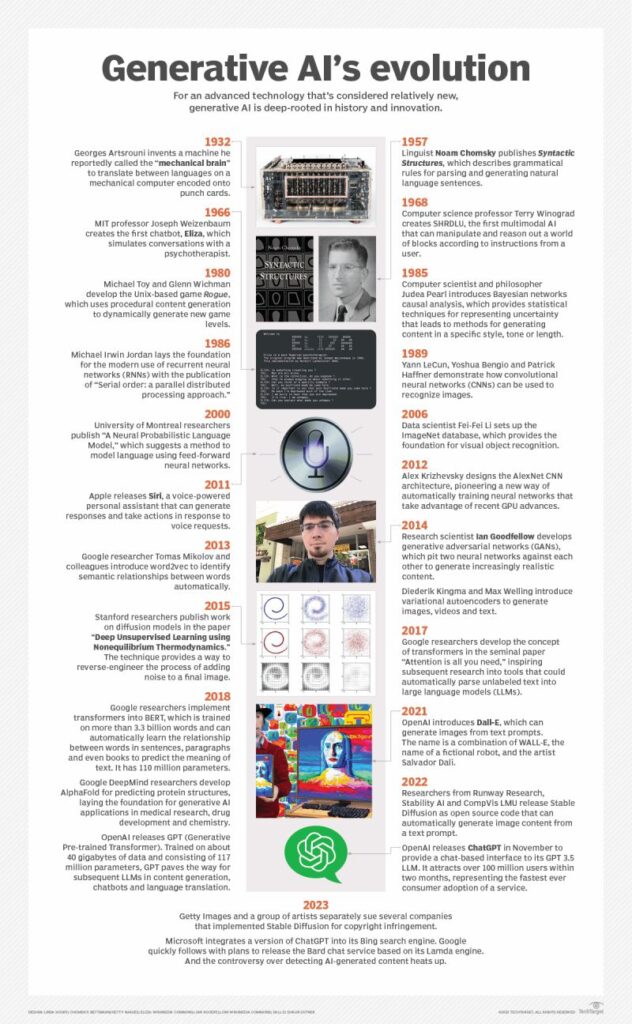
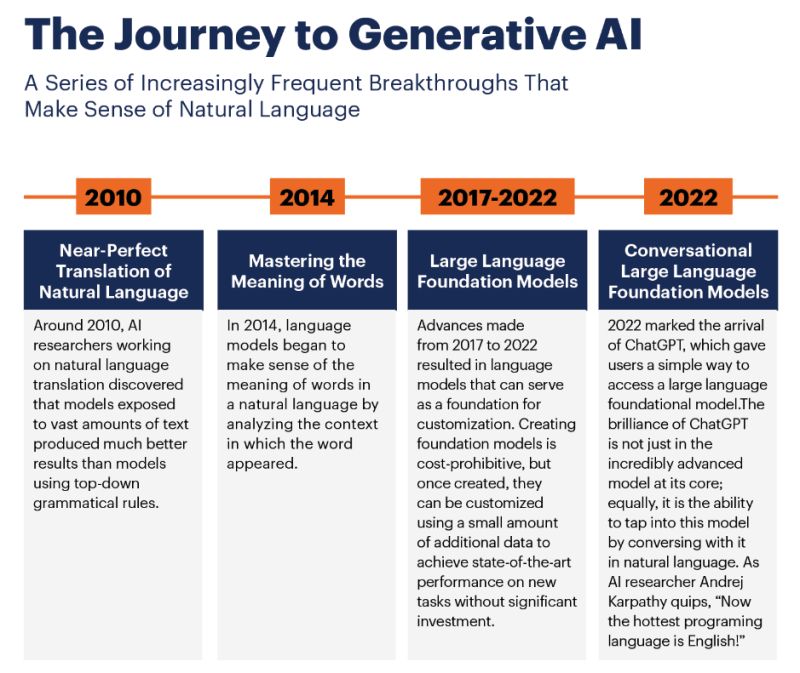
The following visual gives a timeline of how generative AI has evolved over time.
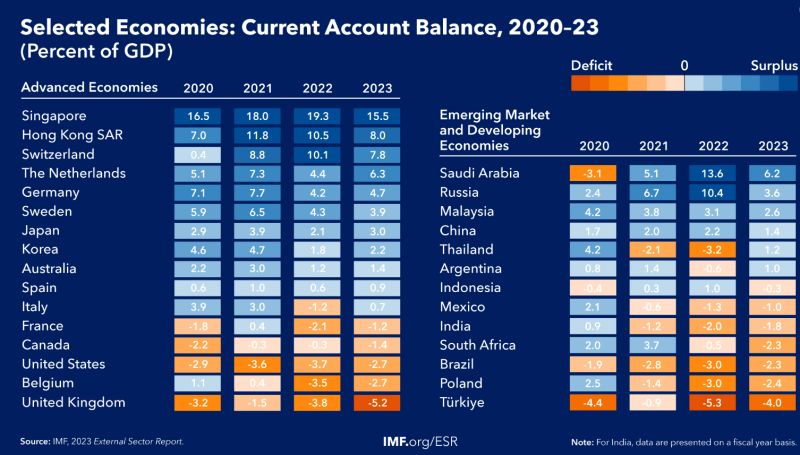
International monetary fund (IMF) has recently published its external sector report on Global current account balances.
Global current account balances (defined as the sum of absolute values of current account deficits and surpluses) increased for the third consecutive year in 2022 and are projected to narrow in 2023. This widening over the three years reflects several factors, including the unequal impact of the COVID-19 crisis in 2020–21 and the increase in commodity prices fueled by the economic recovery in 2021 and later by supply concerns following Russia’s invasion of Ukraine in 2022.
The absence of widespread sudden stops during the pandemic has enabled deficit economies to avoid an abrupt contraction of their current account deficits.
Currency markets exhibited significant fluctuations in 2022, driven by changes in the terms of trade and monetary tightening. The US dollar appreciated by about 8 percent in real effective terms, reaching its strongest level since 2002. Emerging market and developing economies with pre-existing vulnerabilities such as high inflation and misaligned external positions experienced greater depreciation pressures, while commodity-exporting economies benefited from the increase in commodity prices. Historically, US dollar appreciations have had large negative cross-border spillovers, disproportionately affecting emerging markets, and have increased current account balances, as the investment rate falls.
Over the medium term, global current account balances are expected to narrow as the impacts of the pandemic and Russia’s war in Ukraine recede. However, several risks surround this outlook, including a renewed increase in commodity prices, a slower-than-expected recovery in China, or a slower fiscal consolidation in economies with current account deficits. While the impact of geoeconomic fragmentation on global current account balances is unclear, it would unambiguously reduce global welfare.
As a society or organization, we need to take risks to grow and develop. From energy to infrastructure, supply chains to airport security, hospitals to housing, effectively managed risks help societies and organizations sustainably grow and achieve objectives. In our fast-paced world, the risks we have to manage evolve quickly.
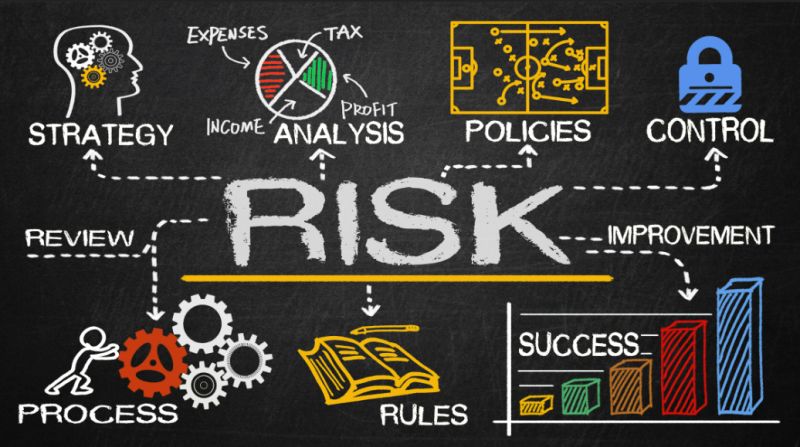
Enterprise risk management (ERM) involves understanding, analyzing, and addressing risk to make sure organizations achieve their objectives.
ERM includes the methods and processes used by organizations to manage risks and seize opportunities related to the achievement of their objectives. The risk management process involves:
1. Establishing Context: This includes an understanding of the current conditions in which the organization operates on an internal, external and risk management context. 2. Identifying Risks: Includes the documentation of the material threats to the organization’s achievement of its objectives and the representation of areas that the organization may exploit for competitive advantage. 3. Analyzing/Quantifying Risks: Includes the calibration and, if possible, creation of probability distributions of outcomes for each material risk. 4. Integrating Risks: Includes the aggregation of all risk distributions, reflecting correlations and portfolio effects, and the formulation of the results in terms of impact on the organization’s key performance metrics. 5. Assessing/Prioritizing Risks: Includes the determination of the contribution of each risk to the aggregate risk profile. 6. Treating/Exploiting Risks: Includes the development of strategies for controlling and exploiting the various risks. 7. Monitoring and Reviewing: Includes the continual measurement and monitoring of the risk environment and the performance of the risk management strategies.
The primary risk functions in organizations that may participate in an ERM program typically include:
a) Strategic planning – identifies external threats and competitive opportunities, along with strategic initiatives to address them. b) Marketing – understands the target customer to ensure product/service alignment with customer requirements. c) Compliance & Ethics – monitors compliance with code of conduct and directs fraud investigations. d) Accounting / Financial compliance – directs the Sarbanes–Oxley Section 302 and 404 assessments, which identifies financial reporting risks. e) Operational Quality Assurance – verifies operational output is within tolerances. f) Operations management – ensures the business runs day-to-day and that related barriers are surfaced for resolution. g) Customer service – ensures customer complaints are handled promptly and root causes are reported to operations for resolution. h) Corporate Security – identifies, evaluates, and mitigates risks posed by physical and information security threats.
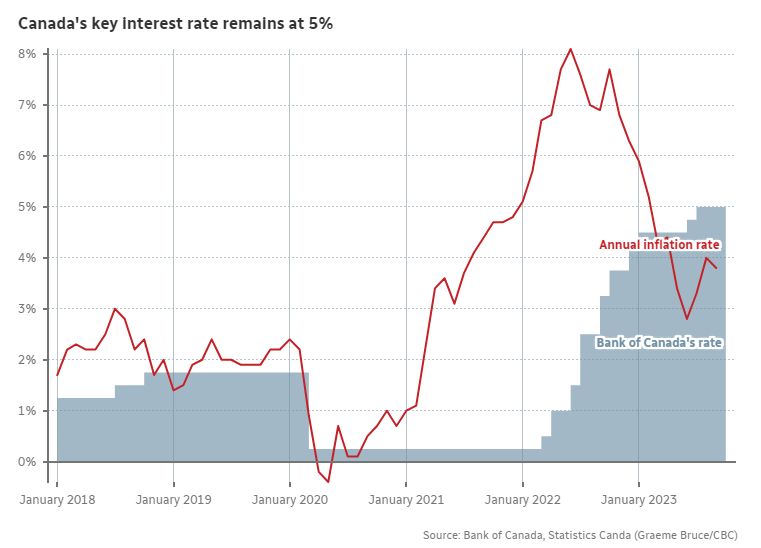
The Bank of Canada has decided to keep its benchmark interest rate steady at five per cent, the second straight time the central bank has done so and a sign it may be moving to the sidelines after raising the cost of borrowing 10 times since last year.
The move was widely expected by economists and investors who follow the central bank, after a slew of data points in recent months — from GDP, to jobs, to inflation itself — painted a picture of an economy that was slowing down.
All things being equal, the central bank raises its rate when it wants to slow down an overheated economy, and cuts it when it wants to stimulate borrowing, spending and investment.
Generative AI is a buzz word that we hear anywhere we go, and has taken everyone by storm. But what really is Generative AI?.
Generative AI can learn from existing artifacts to generate new, realistic artifacts that reflect the characteristics of the training data but don’t repeat it. It can produce a variety of novel content, such as images, video, music, speech, text, software code and product designs.
Generative AI uses a number of techniques that continue to evolve. Foremost are AI foundation models, which are trained on a broad set of unlabeled data that can be used for different tasks, with additional fine-tuning. Foundation models, including generative pretrained transformers (which drives ChatGPT), are among the AI architecture innovations that can be used to automate, augment humans or machines, and autonomously execute business processes.
There are various use cases of Generative AI and some are faster product development, enhanced customer experience and improved employee productivity.
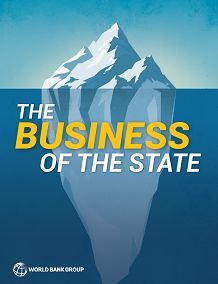
Businesses with state ownership account for a sizeable share of economic activity. Almost 70 percent of these businesses are operating in industries where the private sector is better suited to deliver more efficiently.
The report, The Business of the State, examines 76,000 companies in 91 countries with more than 10 percent government ownership. It shows that the state footprint and influence have become more pervasive as many government’s turned to state owned enterprises to cushion the impact of the global financial crisis and more recently, the Covid-19 pandemic. The firm-level analysis in the report shows that a larger state footprint can reduce business dynamism, increase market concentration, discourage new firms from entering markets, and curb private investment, leading to a slower growth.
The report calls on policymakers to apply five principles to improve the performance of businesses of the state:
· Prepare a nationwide mapping of businesses of the state · Reassess state involvement in competitive industries · Support strong institutions to regulate markets · Encourage competition between public and private firms on a level playing field · Have a phase-out strategy for state businesses when no longer needed.
These efforts will help achieve higher productivity and growth while reducing pressure on public finances.
In the health sector, FDA has granted a de novo clearance to an artificial intelligence program capable of reading a standard brain MRI scan and predicting a patient’s chances of progressing from mild cognitive impairment and early memory loss to Alzheimer’s disease and dementia within five years.
Described as a virtual microscope, the BrainSee prognostic program could be implemented before a positron emission tomography (PET) scan, which requires injections of radioactive tracers, or instead of biopsies of cerebrospinal fluid.
The program only requires a common 3D MRI scan, with no contrast injections, as well as cognitive test scores that are typically collected during a diagnostic workup.
Local Governments also have an opportunity to benefit from this advanced technology.
AI deals with the simulation of intelligent behavior in computers; the capability of a machine to imitate intelligent human behavior. It refers to systems capable of performing tasks that historically required human intelligence. These tasks include recognizing speech, making decisions, and identifying patterns. AI is an umbrella term that encompasses various technologies, such as machine learning, deep learning, and natural language processing (NLP).
Following are some use cases of how Local Governments can benefit from AI.
1) Local Governments Can Run More Efficiently. A top benefit of A.I. is that it enables an organization to become more efficient at structuring chief operating tasks. When cities and counties run efficiently, more is accomplished with less, and our communities have a lot to accomplish with never-quite-enough resources and tight budgets. A.I. can help managers stay on top of policies and identify the initiatives that matter most to citizens.
2) Local Governments Can Focus on Their Residents. A.I. plays a big role in delivering personalized user experiences, creating a more personalized connection for a local government to its residents by adapting to their specific needs. The work of city hall directly impacts the everyday lives of residents. Using A.I. to analyze feedback from citizens about this impact facilitates the shaping of policies and initiatives that address the most important issues. In North Carolina, for example, government offices realized that they could help speed up the process of responding to residents’ questions with the help of a chatbot. With fewer calls to respond to, government offices could dedicate more resources and time to other community projects, while being more responsive to citizens.
3) Local Governments Can Remove a Great Deal of Bias People are prone to bias and subjective decision-making because we’re human, making decisions that require objectivity – such as hiring – much more difficult. A.I. can circumvent some of our inherent bias. It does this by only considering variables that are relevant to a decision.
4) Local Governments Can Make Data-Smart Decisions and Get that Extra Edge for Under-Resourced Departments A.I. can help organizations do things that they may not otherwise have the staff capacity to do. A.I. can analyze data from all kinds of different sources to provide managers with important insights. For example, in the case of communicating with residents, instead of manually reading through discussions, social media posts, and other sources of citizen feedback, managers can use A.I. to automate collecting, curating, and organizing this data for them.
Every year, MIT looks at the promising technologies poised to have a real impact on the world. Here are the advances that MIT thinks matter most right now.
1) AI for everything: We now live in the age of AI. Hundreds of millions of people have interacted directly with generative tools like ChatGPT that produce text, images, videos, and more from prompts. Their popularity has reshaped the tech industry, making OpenAI a household name and compelling Google, Meta, and Microsoft to invest heavily in the technology.
2) Super-efficient solar cells: Solar power is being rapidly deployed around the world, and it’s key to global efforts to reduce carbon emissions. But most of the sunlight that hits today’s panels isn’t being converted into electricity. Adding a layer of tiny crystals could make solar panels more efficient.
3) Enhanced geothermal systems: Geothermal energy is clean, always available, and virtually limitless. However, because of engineering challenges, we have barely scratched the surface of what it can offer. New drilling techniques, which dig deeper and in places where we couldn’t before, are unleashing more of Earth’s heat to produce clean energy.
4) Chiplets: It’s getting devilishly hard to make transistors smaller—the trend that defines Moore’s Law and has driven progress in computing for decades. Engineers must now find new ways to make computers faster and more efficient. Chiplets are small, specialized chips that can be linked together to do everything a conventional chip does, and more.
5) The first gene-editing treatment: New treatments based on CRISPR have been in the works for years. In the final weeks of 2023, one from Vertex became the first to earn regulatory approval in both the UK and the US for its ability to cure sickle-cell disease, a life-threatening condition. It won’t be the last.
Please click on the following link for the full article.